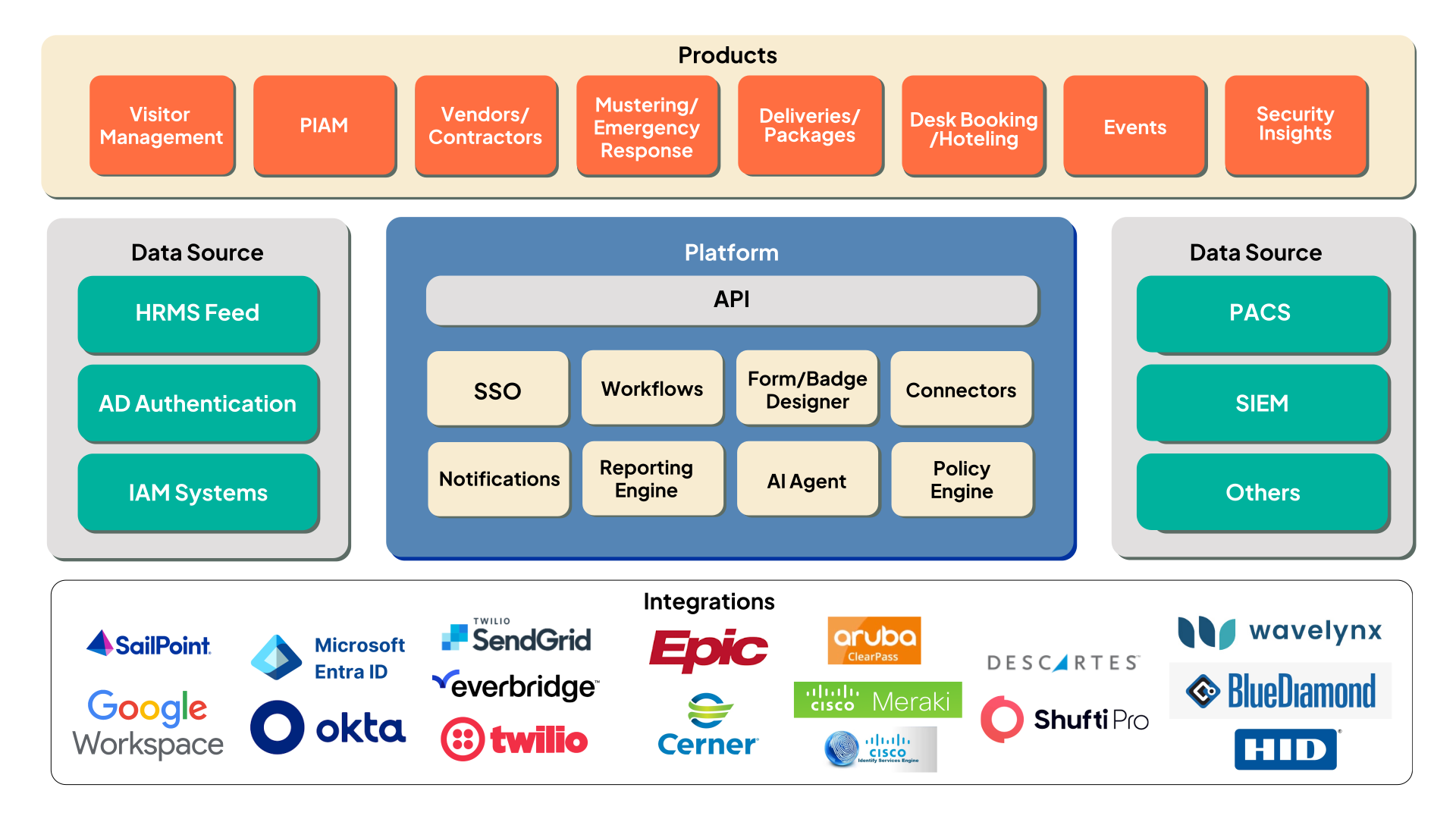
A Scalable and Secure Framework
A cloud-native, API-driven architecture enabling unified visitor, identity, and access control management across enterprise environments.
Step 4: Check Parental ConstraintsIf a parent is Type AB, they cannot have a Type O child because they don’t have an O allele to pass down. Similarly, if a parent is Type O, all of their children must carry at least one O allele. The Mystery Answer Key: Common Scenarios
While specific lab versions vary, most "updated" mystery activities follow a similar logic. Here are the likely answers for the standard pedigree markers:
Understanding human genetics often feels like playing detective. In biology classrooms, one of the most engaging ways to learn about inheritance is through the blood type pedigree mystery. This lab activity challenges students to use phenotypic data to determine genotypes and trace the lineage of a specific trait—in this case, ABO blood groups. If you are looking for the updated answer key and a breakdown of how to solve these mysteries, this guide provides the clarity you need. The Basics of Blood Type Inheritance
Step 2: Identify the CodominantsNext, locate the Type AB individuals. Their genotype is always AB. These individuals are "fixed points" in your puzzle because there is no ambiguity about which alleles they carry.
Step 1: Start with the RecessivesThe easiest way to begin solving the mystery is to look for individuals with Type O blood. Because Type O is recessive, their genotype must be OO. Write this down immediately.
The Grandparents: Usually, one is Type O (OO) and the other is Type A or B, establishing the presence of the recessive allele in the first generation.The "Mystery" Child: Often, students must determine if a child could belong to a specific set of parents. If the parents are Type AB and Type O, the child can only be Type A (AO) or Type B (BO). If the lab asks why a Type O child doesn't fit, the answer is that the AB parent lacks the recessive allele.The Missing Genotypes: For Type A or B individuals with one Type O parent, the answer key will always list them as heterozygous (AO or BO). Why This Lab Matters
The Lab Activity Blood Type Pedigree Mystery Answer Key: Solving the Genetic Puzzle
A pedigree is a visual chart that tracks a trait through generations. In a blood type mystery lab, squares represent males and circles represent females. Lines connect parents and offspring. The goal is usually to identify the blood type or genotype of a "mystery" individual or to prove paternity/maternity within a fictional scenario.
Before diving into the pedigree, we must establish the rules of the game. Blood typing is governed by three alleles: A, B, and O.
Step 3: Work Backwards from OffspringIf a child has Type O blood (OO), they must have received one O allele from each parent. This means that even if a parent has Type A or Type B blood, their genotype must be heterozygous (AO or BO). This is the most common "aha!" moment in the lab activity.
Enhancing security and access control across corporate, healthcare, education, government, and other sectors with an AI-powered visitor management solution for intelligent identity verification and risk mitigation.

Accelerate workplace security by managing employee, contractor, and visitor access.

Adhere to compliance and security by regulating access to sensitive areas of everyone.

Empower tenants across a wide range of locations to assign and regulate access.

Oversee patient visits, appointment visits, employees and temporary check-ins.

Safeguard students with visitor screening w.r.t parents and guardians.

Track and control access to critical infrastructure for clear audit trails and reports.

Visitor Management and Access Governance for employees, contractors and vendors.

Maintain strict access control and real-time location tracking of the confidential data.
Optimize automated onboarding workflows and centralized access governance to enforce role-based policies, ensuring easy identity provisioning, real-time access control, and regulatory compliance across enterprise systems.
Provision role-based access making sure that new employees have appropriate permissions.
Adjust access levels whenever employees switch roles or departments, accordingly.
Enable employees to request additional access with approvals managed via workflows.
Conduct periodic user access reviews to validate compliance with security policies.
Deactivate user accounts and revoke system access immediately upon termination.


Trusted in countries across the world.
Speaks multiple languages.
Processed visitors in total.
Integrate Splan Visitor Management & PIAM for Unified Identity Governance

Access Control Systems

Adaptable Deployments

Modern Access

Total Identity

Uninterrupted Connectivity

Extra Security Layer

Extended Patient Care

Mustering and Evacuation

API Communication
Step 4: Check Parental ConstraintsIf a parent is Type AB, they cannot have a Type O child because they don’t have an O allele to pass down. Similarly, if a parent is Type O, all of their children must carry at least one O allele. The Mystery Answer Key: Common Scenarios
While specific lab versions vary, most "updated" mystery activities follow a similar logic. Here are the likely answers for the standard pedigree markers:
Understanding human genetics often feels like playing detective. In biology classrooms, one of the most engaging ways to learn about inheritance is through the blood type pedigree mystery. This lab activity challenges students to use phenotypic data to determine genotypes and trace the lineage of a specific trait—in this case, ABO blood groups. If you are looking for the updated answer key and a breakdown of how to solve these mysteries, this guide provides the clarity you need. The Basics of Blood Type Inheritance
Step 2: Identify the CodominantsNext, locate the Type AB individuals. Their genotype is always AB. These individuals are "fixed points" in your puzzle because there is no ambiguity about which alleles they carry.
Step 1: Start with the RecessivesThe easiest way to begin solving the mystery is to look for individuals with Type O blood. Because Type O is recessive, their genotype must be OO. Write this down immediately.
The Grandparents: Usually, one is Type O (OO) and the other is Type A or B, establishing the presence of the recessive allele in the first generation.The "Mystery" Child: Often, students must determine if a child could belong to a specific set of parents. If the parents are Type AB and Type O, the child can only be Type A (AO) or Type B (BO). If the lab asks why a Type O child doesn't fit, the answer is that the AB parent lacks the recessive allele.The Missing Genotypes: For Type A or B individuals with one Type O parent, the answer key will always list them as heterozygous (AO or BO). Why This Lab Matters
The Lab Activity Blood Type Pedigree Mystery Answer Key: Solving the Genetic Puzzle
A pedigree is a visual chart that tracks a trait through generations. In a blood type mystery lab, squares represent males and circles represent females. Lines connect parents and offspring. The goal is usually to identify the blood type or genotype of a "mystery" individual or to prove paternity/maternity within a fictional scenario.
Before diving into the pedigree, we must establish the rules of the game. Blood typing is governed by three alleles: A, B, and O.
Step 3: Work Backwards from OffspringIf a child has Type O blood (OO), they must have received one O allele from each parent. This means that even if a parent has Type A or Type B blood, their genotype must be heterozygous (AO or BO). This is the most common "aha!" moment in the lab activity.